Claims Operations
What a home warranty claim actually costs when nobody triages it
Most of the cost of a claim is committed in the first hour, before anyone has looked at it. Here is where it goes.
The largest controllable cost in a home warranty claim is the truck roll, and the decision to send one is usually made before anyone has diagnosed the failure. Triage moves that decision earlier.

Matty Piotrowski
Head of Design
·
6 min read

A claim arrives. Within the hour, someone has decided whether to send a technician. That single decision carries more cost than everything that follows it, and it is usually made without a diagnosis.
Where the money actually goes
Four decisions set the cost of a claim, and none of them are the intake form. Whether a truck rolls at all. Whether the failure is covered under the contract the customer actually holds. Which part the job needs and what you pay for it. Whether an incremental spend request should be approved.
The truck roll you did not need
Roughly 80% of customers will engage over SMS before a dispatch is booked.
Close to one in twelve claims turns out not to need a technician at all.
Coverage classification against contract clauses runs above 95% accuracy.
At the individual claim level, the notes and triage information are helping the team make better dispatch decisions.
What this looks like in practice
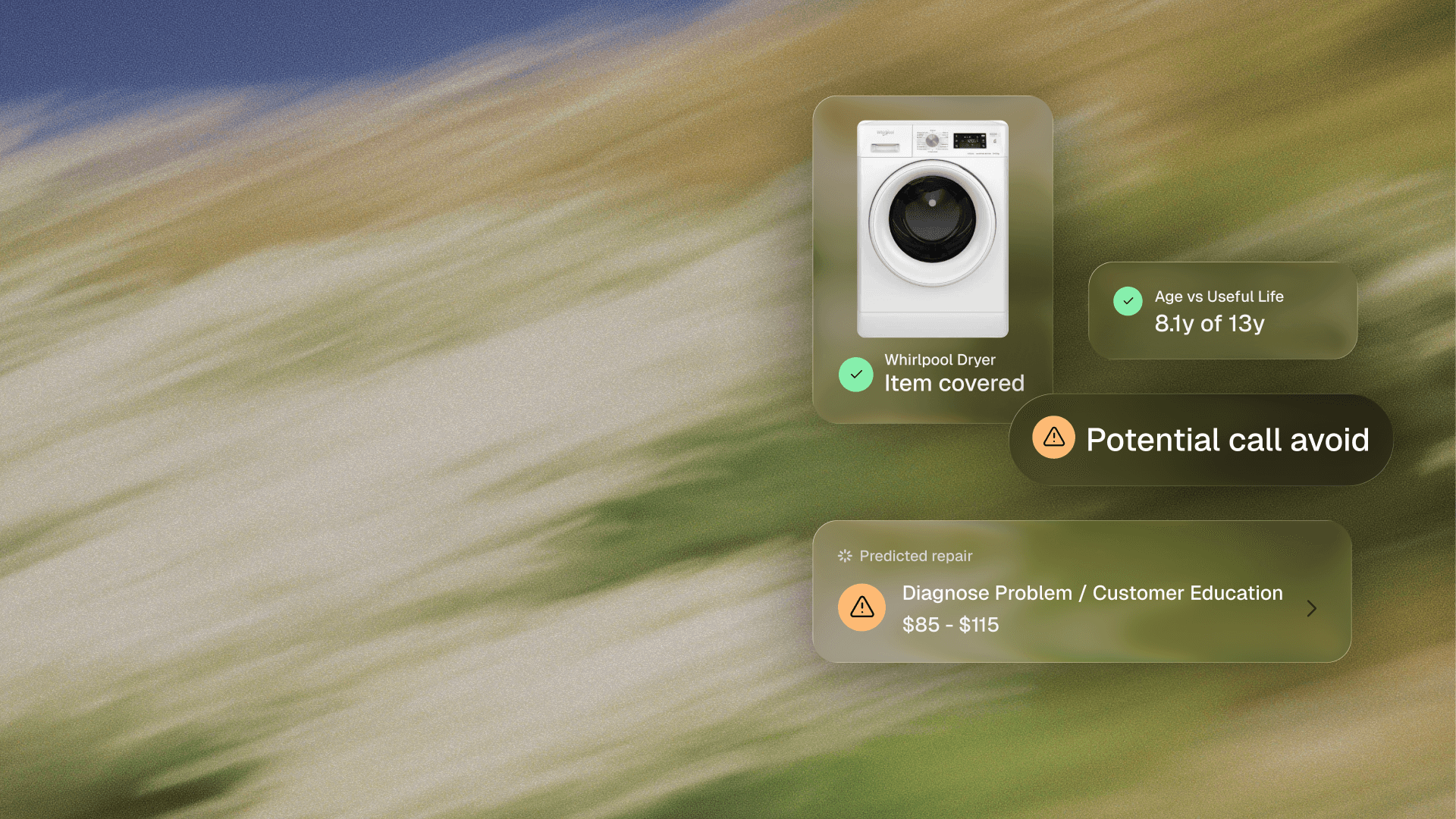
The point is not that intake is unimportant. It is that intake is where cost is recorded, and triage is where cost is decided.